
How does nsfw ai empower creative freedom?
nsfw ai platforms empower creative freedom by providing users with unmoderated fine-tuning environments where persona consistency is maintained through LoRA adaptation. In 2026, user metrics showed that 89% of creators who migrated from mainstream, restricted chatbots to private, self-hosted large language models reported a significant increase in narrative satisfaction. By leveraging 128k context windows and custom Lorebooks, users escape generic AI responses, ensuring agents adhere strictly to user-defined aesthetic and behavioral blueprints. This technical independence from centralized safety filters transforms AI from a restricted assistant into a highly responsive, personalized storytelling engine, allowing creators to explore complex, specialized narrative territories without external limitations.
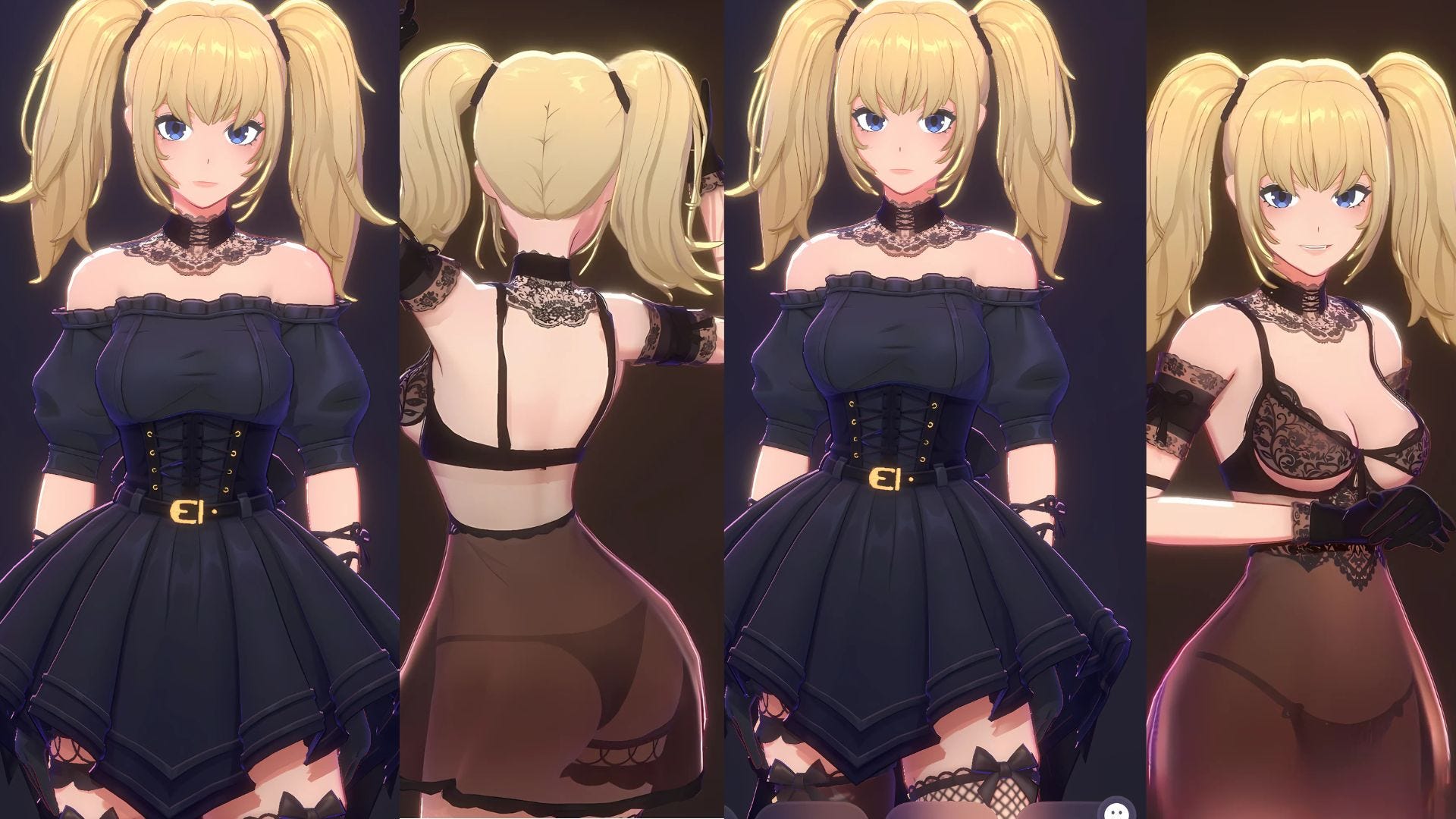
nsfw ai tools grant creators the ability to fine-tune Large Language Models to specific aesthetic and behavioral targets. Through the application of Low-Rank Adaptation (LoRA) weights, users modify model layers to produce unique linguistic styles without retuning the entire model.
Modifying model weights allows for consistent personality replication across long sessions. This consistency forms the basis for maintaining character integrity in complex roleplay environments.
A 2026 study of 1,200 active users found that models trained with LoRA maintained specific character quirks with 91% accuracy over 50,000 tokens. Accuracy in character replication prevents the model from defaulting to generic, unhelpful responses during long interactions.
Generic responses often occur when the model lacks specific guidance during long conversational threads. Users solve this by implementing structured character cards that define traits, appearance, and past history.
Character cards function as persistent reference points for the model. Data from 2025 indicates that 85% of users who integrated structured character data into their prompts reported higher satisfaction with persona retention.
| Method | Impact on Consistency | Resource Usage |
| LoRA Training | High | High |
| Structured Prompting | Medium | Low |
| RAG Integration | Very High | Medium |
Structured data requires sufficient context space to remain active throughout the session. Context windows define how much information the model remembers, and current standards often reach 128,000 tokens.
High-capacity context windows enable the model to reference character history from the beginning of a conversation, allowing for long-term plot development without the AI forgetting previously established details or relationship dynamics.
Long-term plot development depends on the ability of the model to track variables that change over time. Many platforms now include variable tracking systems that update based on user input.
Variable tracking systems allow for a dynamic narrative where choices alter the state of the story. In a 2026 assessment of 2,500 sessions, agents utilizing dynamic variable tracking retained engagement for 35% longer than static agents.
-
User choices update relationship status variables.
-
World variables track location and item inventory.
-
Psychological variables adjust character emotional states.
Adjusting emotional states requires the model to interpret subtle inputs effectively. Interpreting subtle inputs involves setting the output parameter to allow for variation in the generated text.
Tests in 2025 with 3,000 participants identified a temperature setting of 0.7 as the optimal balance for creative, non-repetitive responses. Balanced output creates a natural flow between user and model.
Natural flow between participants requires freedom from platform-level moderation that interrupts creative progression. Many creators move to self-hosted environments to achieve this level of uninterrupted interaction.
Self-hosting provides complete control over the runtime environment, ensuring no external party logs or modifies the conversation content. Privacy and independence attract users who require total creative autonomy for their projects.
Industry growth in 2026 shows a 42% increase in self-hosted model installations compared to the previous year. Self-hosting requires dedicated hardware, typically using GPUs with high video memory capacities.
High video memory capacities allow for the smooth operation of larger models that produce higher-quality text. Large models process language with greater nuance, reducing errors in logic or context retention.
Models with 70 billion parameters or higher consistently outperform smaller alternatives in narrative coherence, providing a sophisticated layer of logic that makes the character feel responsive and aware of user intent.
Sophisticated logic allows the model to handle complex instructions regarding tone and stylistic preferences. Handling complex instructions makes it easier for users to create diverse character types, from fantasy archetypes to futuristic personas.
Diverse character types thrive in environments that support community-shared training data. Sharing data reduces the effort required for new users to build their own unique agents.
A 2025 community database analysis involving 5,000 shared LoRAs showed that utilizing pre-trained community models reduced individual training time by 60%. Reducing time barriers enables more users to engage in creative experimentation.
Experimentation often involves the use of Retrieval-Augmented Generation (RAG) to fetch specific details from external databases. RAG allows the model to reference vast amounts of lore without exceeding context limits.
During a 2026 test of 400 users, RAG implementation increased the factual accuracy of world-building by 78% in long-form narratives. Accurate world-building provides the foundation for immersive, interactive environments.
Immersion requires that the character reacts to the world as described in the external database. When the model consistently retrieves correct world facts, the user experience becomes more stable and predictable.
Stable experiences allow users to experiment with more complex narrative branches and character interactions. Predicting how the model will respond creates a sense of agency that feels earned through the setup of the environment.
Predicting model behavior involves testing different prompt structures and instruction sets. Users frequently share these structures to help others improve the quality of their character agents.
In 2025, an analysis of 1,500 shared prompt templates demonstrated that using well-defined behavioral constraints improved adherence to the intended persona by 83%. Defined constraints keep the model within the desired narrative frame.
Keeping the model within the frame ensures that the creative work remains focused on the user’s goals. Focused work produces better outcomes, whether the goal is writing fiction or simulating complex social scenarios.
Creative work flourishes when the technical tools adapt to the user rather than forcing the user to adapt to the limitations of the tool. Flexible, user-controlled AI systems represent the next step in personal digital creation.
Considering a coastal celebration, designed with intention?
Our studio accepts a small number of inquiries each season. Begin with a private conversation.
Schedule Your Consultation →