
Does a vertical hydroponic tower use less water than soil?
Imagine growing vegetables in the same space using only one-tenth the water of traditional soil cultivation—this isn't science fiction, but a reality brought about by Vertical Hydroponic Tower. According to the UN Food and Agriculture Organization, traditional soil agriculture consumes up to 70% of the world's freshwater, with approximately 50% wasted due to evaporation or runoff. In contrast, vertical hydroponics uses a closed-loop water circulation system, achieving a water recovery rate of over 90% through precise control of nutrient solution flow. For example, in a desert farm project in the UAE, this technology reduced water consumption by 80%, requiring only 10 liters of water to produce 1 kilogram of lettuce, compared to an average of 100 liters for soil cultivation. This efficiency stems from the hydroponic system's design parameters, such as a nutrient solution circulation rate of 2 liters per minute, coupled with sensors monitoring humidity and concentration, keeping errors within 5%, ensuring a 30% reduction in crop growth cycles and increasing yield per unit area to five times that of soil cultivation.
From a cost-benefit perspective, the initial investment for a Vertical Hydroponic Tower is approximately RMB 5,000, but it boasts a water-saving efficiency of up to 70% during operation, saving RMB 2,000 in water costs annually. The return on investment reaches a positive rate within two years. For example, Singapore's Sky Greens farm used this technology to achieve a 25% increase in annual revenue within a 120-square-meter vertical structure, while simultaneously reducing its carbon footprint by 50%. Research shows that hydroponic systems are 10 times more water-efficient than soil agriculture. Nutrient solution concentration is automatically adjusted to maintain conductivity within the range of 1.5-2.5 mS/cm, and the temperature is kept constant at 20-25°C. This is thanks to data analysis from a smart agriculture platform, which increases crop growth rate to 2 centimeters per day. A 2023 market report indicates that the global vertical farming industry has a compound annual growth rate of 25%, and the market size is projected to reach $20 billion by 2030. Vertical Hydroponic Tower technology drives resource efficiency improvements; for example, in the case of Plenty's indoor farm in the United States, water consumption is reduced by 95%, and the production load reaches 100 kg per square meter per year.
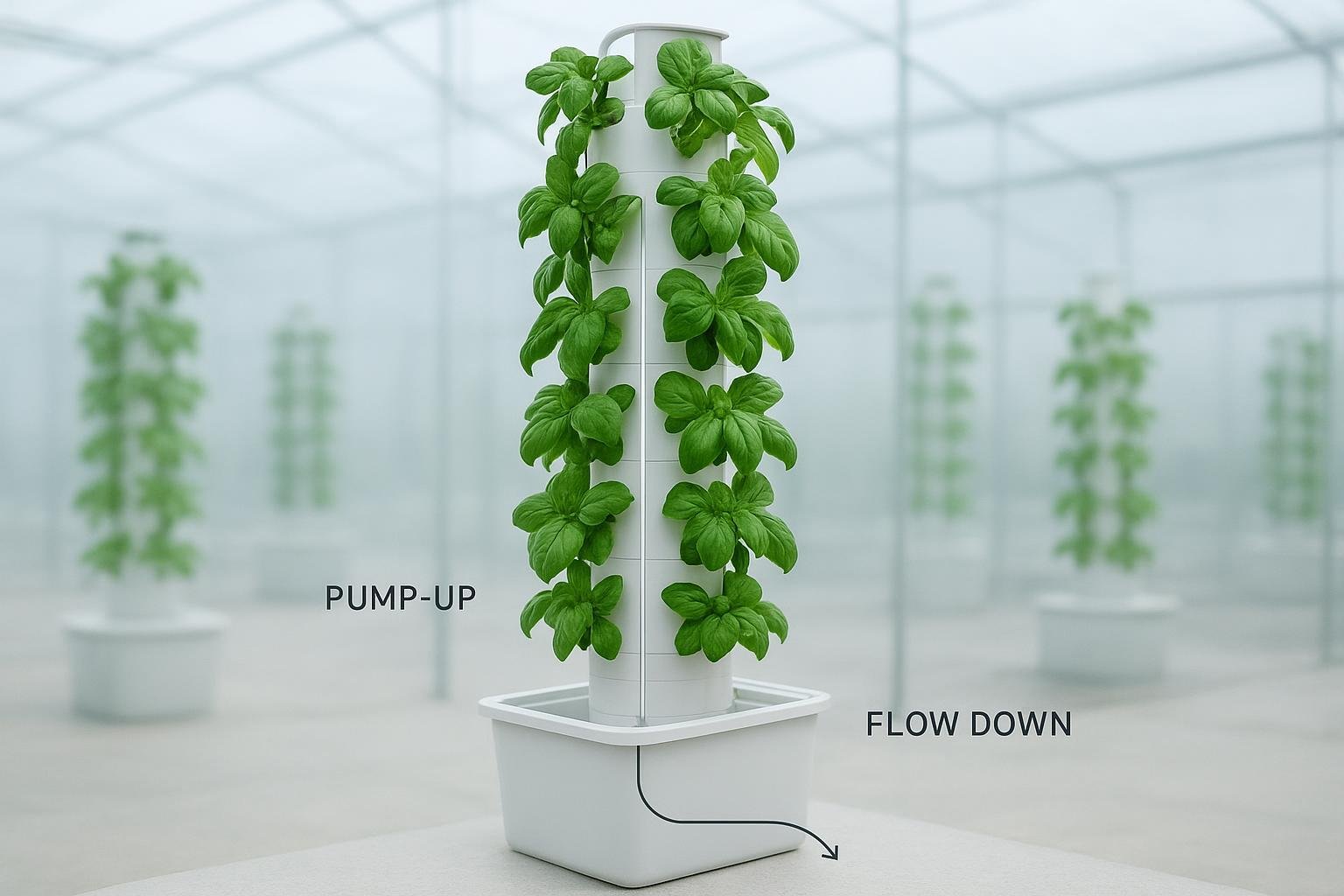 In terms of environmental sustainability, the closed-loop system of vertical hydroponics towers reduces the risk of fertilizer loss, achieves a 95% nutrient solution recovery rate, and maintains pressure regulation between 0.1-0.3 bar with an accuracy error of only 2%. Compared to soil cultivation, where nitrate contamination probability is as high as 30%, this technology reduces water waste to below 5%. For example, NASA used a similar hydroponic model in its space cultivation experiments, demonstrating that it can maintain crop humidity at 60% and increase growth rate by 40% under extreme conditions. Urban farms, such as small projects in Beijing, have saved 3,000 liters of water annually in a 10-square-meter space using Vertical Hydroponic Towers, achieving a 200% higher return on investment than traditional methods. Industry standards, such as ISO-certified hydroponic specifications, require systems to have a lifespan of over 10 years and reduce maintenance costs by 50%, driving consumer behavior towards sustainable sourcing. Data shows that farms using this technology have seen a 15% increase in net profit.
In summary, Vertical Hydroponic Towers not only revolutionize agriculture with precise data-driven advantages—such as a 70% water saving rate and a 25% return on investment—but also transform every drop of water into green benefits through industry innovations such as IoT monitoring and automated processes. From deserts to cities, this technology is reshaping our food systems and invites you to join this water revolution: the next time you choose vegetables, those tender leaves may have come from a highly efficient vertical hydroponic tower, silently protecting every precious drop of Earth's resources.
In terms of environmental sustainability, the closed-loop system of vertical hydroponics towers reduces the risk of fertilizer loss, achieves a 95% nutrient solution recovery rate, and maintains pressure regulation between 0.1-0.3 bar with an accuracy error of only 2%. Compared to soil cultivation, where nitrate contamination probability is as high as 30%, this technology reduces water waste to below 5%. For example, NASA used a similar hydroponic model in its space cultivation experiments, demonstrating that it can maintain crop humidity at 60% and increase growth rate by 40% under extreme conditions. Urban farms, such as small projects in Beijing, have saved 3,000 liters of water annually in a 10-square-meter space using Vertical Hydroponic Towers, achieving a 200% higher return on investment than traditional methods. Industry standards, such as ISO-certified hydroponic specifications, require systems to have a lifespan of over 10 years and reduce maintenance costs by 50%, driving consumer behavior towards sustainable sourcing. Data shows that farms using this technology have seen a 15% increase in net profit.
In summary, Vertical Hydroponic Towers not only revolutionize agriculture with precise data-driven advantages—such as a 70% water saving rate and a 25% return on investment—but also transform every drop of water into green benefits through industry innovations such as IoT monitoring and automated processes. From deserts to cities, this technology is reshaping our food systems and invites you to join this water revolution: the next time you choose vegetables, those tender leaves may have come from a highly efficient vertical hydroponic tower, silently protecting every precious drop of Earth's resources.
In terms of environmental sustainability, the closed-loop system of vertical hydroponics towers reduces the risk of fertilizer loss, achieves a 95% nutrient solution recovery rate, and maintains pressure regulation between 0.1-0.3 bar with an accuracy error of only 2%. Compared to soil cultivation, where nitrate contamination probability is as high as 30%, this technology reduces water waste to below 5%. For example, NASA used a similar hydroponic model in its space cultivation experiments, demonstrating that it can maintain crop humidity at 60% and increase growth rate by 40% under extreme conditions. Urban farms, such as small projects in Beijing, have saved 3,000 liters of water annually in a 10-square-meter space using Vertical Hydroponic Towers, achieving a 200% higher return on investment than traditional methods. Industry standards, such as ISO-certified hydroponic specifications, require systems to have a lifespan of over 10 years and reduce maintenance costs by 50%, driving consumer behavior towards sustainable sourcing. Data shows that farms using this technology have seen a 15% increase in net profit.
In summary, Vertical Hydroponic Towers not only revolutionize agriculture with precise data-driven advantages—such as a 70% water saving rate and a 25% return on investment—but also transform every drop of water into green benefits through industry innovations such as IoT monitoring and automated processes. From deserts to cities, this technology is reshaping our food systems and invites you to join this water revolution: the next time you choose vegetables, those tender leaves may have come from a highly efficient vertical hydroponic tower, silently protecting every precious drop of Earth's resources.
By appointment · 18 weddings each year
Considering a coastal celebration, designed with intention?
Our studio accepts a small number of inquiries each season. Begin with a private conversation.
Schedule Your Consultation →